
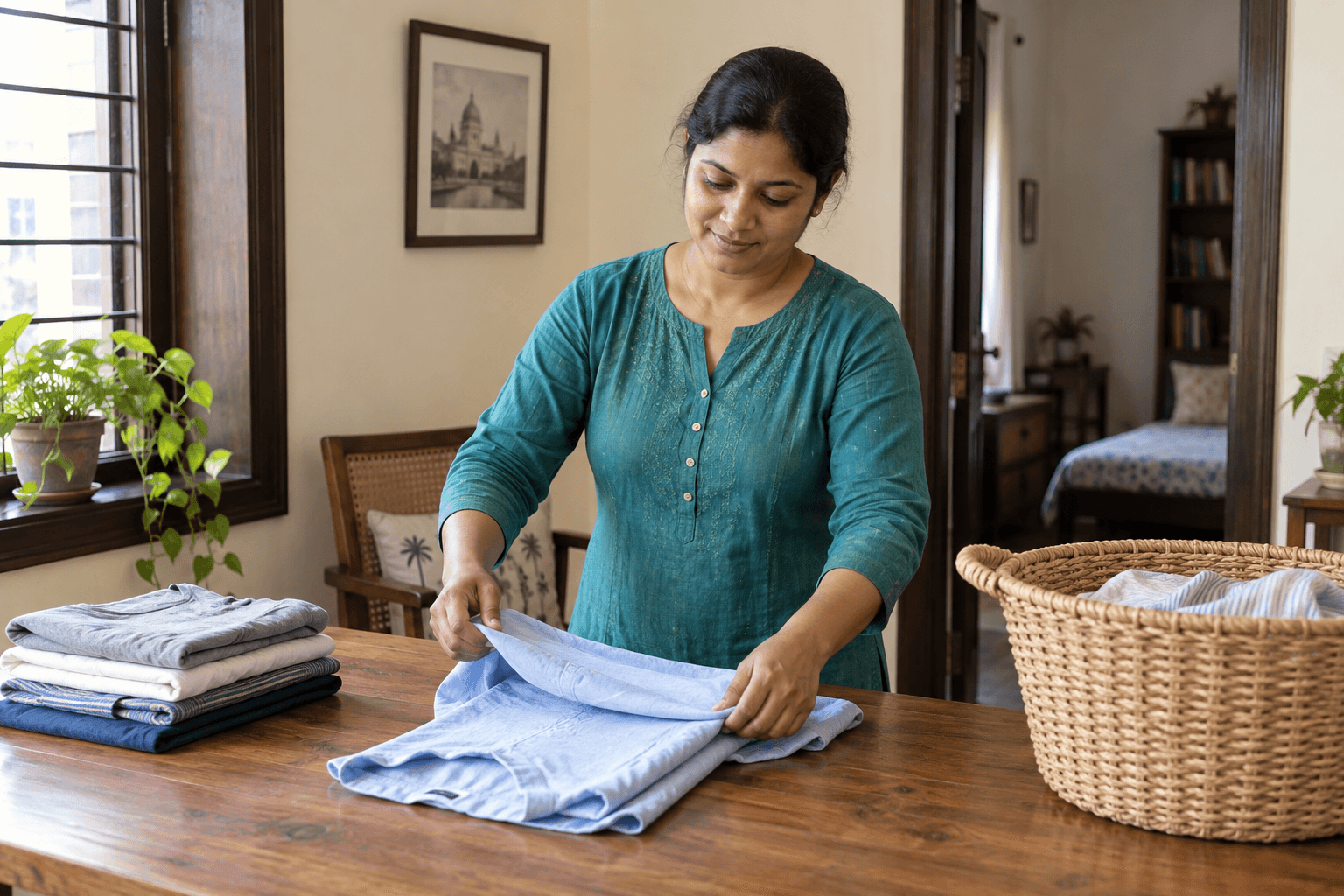
To hand wash clothes, first confirm that the garment permits the method and select a product intended for it. Work through washing, rinsing, gentle water removal and the specified drying method as one complete task. Start with a single ordinary garment whose instructions are clear, rather than combining unfamiliar items in a bucket and deciding what to do afterwards.
This walkthrough concerns routine laundry. An expensive embellished outfit, an unreadable label or an item requiring professional care needs its own decision. Hand washing is not automatic permission to wash everything that cannot enter a machine.
Prepare the end of the task before the beginning
Read the washing and drying instructions together. A garment might be washable but require a drying arrangement that is currently unavailable. Identify where the wet item will go, what will support it and how it will be kept separate from waiting laundry. Leave enough time to rinse and transfer it; starting a wash immediately before leaving home can create an unfinished wet item.
Choose a clean basin suitable for the task and a place to put the garment between stages. Check the detergent's own hand-washing directions, including dose and precautions. The word liquid alone does not establish suitability. Keep the product container available so the next person can identify what was used. Prepare fresh rinse water through the household's normal water supply; do not combine cleaning products to create a stronger mixture.
Use the garment care register if several family members handle the same clothes. For one familiar item, reading its instructions directly may be sufficient; a full inventory is optional.
The washing sequence
The following short method follows the basic sequence in Ariel's hand-washing guidance, with the garment and detergent instructions controlling the actual settings:
- Keep incompatible colours, fabrics and heavily soiled items separate.
- Prepare water at the permitted temperature and add the appropriate hand-washing detergent as directed on its pack.
- Immerse the accepted garment and move it gently through the wash water. Avoid aggressive twisting or scrubbing.
- Drain the wash water and rinse with fresh water until detergent is removed. Follow any more specific rinsing instruction for the item.
- Gently press out excess water without wringing, then use the garment's required drying method.
Do not turn a generic soaking suggestion into a fixed rule for every item. A required soak, stain treatment or other special process must be supported by the actual garment and product instructions.
Use distinct places for three different states
Place the waiting dry garment, the washing basin and the destination for the rinsed item so that their purposes are obvious. A rinsed blouse put back on a pile of unwashed clothes creates uncertainty even if the wash itself was careful. A small home does not require three separate tables: three clearly identified suitable containers or areas can serve the same purpose.
Keep the garment in view as it moves through those states. If someone interrupts, explain the current stage precisely: washed but not rinsed is different from rinsed and awaiting drying. Do not describe either as finished. If the task passes to another person, leave the instructions and the item's identity together rather than relying on a message such as finish the blue one.
Fictional worked example: one blouse, two rejected shortcuts
Mita has an ordinary blouse with readable instructions permitting gentle hand washing and requiring flat drying. She has a suitable detergent with hand-washing directions. The flat drying support is clear, and there is enough time to complete the rinse before her afternoon appointment.
A dark scarf is also waiting nearby. Its instructions are not readable, so it stays out of this wash. Mita does not add it simply because the basin looks spacious. She also leaves a separately marked shirt for its agreed process instead of making every item use the blouse's method.
| Point in this fictional task | What Mita does | What makes the decision complete |
|---|---|---|
| Admission | Accepts the labelled blouse only | The other two items remain identifiable and dry |
| Product choice | Reads the hand-washing directions | No machine-only dose is guessed |
| Wash stage | Follows the permitted gentle method | She can explain which stage is in progress |
| Rinse stage | Uses fresh water as required | The garment is not returned to the waiting pile |
| Water removal | Follows the garment's restrictions | No shortcut is introduced to hurry drying |
| Drying transfer | Uses the prepared flat support | The item is supported in its specified arrangement |
| Completion | Checks the whole garment before storing | Drying is not assumed finished because washing ended |
The useful result is one completed garment and two clear pending decisions. It is not a full basin at any cost. This example supplies no universal water temperature, detergent quantity or drying time.
Troubleshoot the process, not the fabric by guesswork
If the wash water becomes unexpectedly coloured, do not add another garment. Stop combining items and seek the garment maker's guidance on the observed change. The colour of the water alone does not prove whether an item is damaged, and this guide cannot prescribe a recovery treatment.
If a mark remains after the permitted wash, identify it as remaining. Repeated rubbing, a longer soak or an extra chemical is a new treatment decision. Photograph the garment only with the owner's agreement if it helps explain the issue; do not promise that another wash will remove it.
If the drying space becomes unavailable, arrange the required alternative before the garment is left in an improvised heap. When a second person takes over, give the actual drying instruction and the item's present condition. A clock-based deadline cannot replace checking the result.
Decide what to repeat next time
After the first successful routine, keep only the information that prevents a real mistake: garment identity, confirmed method, product used according to its directions and any unresolved issue. There is no need to record every movement of the basin. Recheck when the garment, detergent or task changes.
For unfamiliar symbols, use the laundry symbol guide. For a household arrangement involving several people, the laundry preferences checklist separates washing, drying and return duties. To discuss laundry help in Kolkata, share the accepted tasks and locality by WhatsApp or call. Confirm scope, availability and the complete quote; this tutorial does not promise specialist garment treatment.