
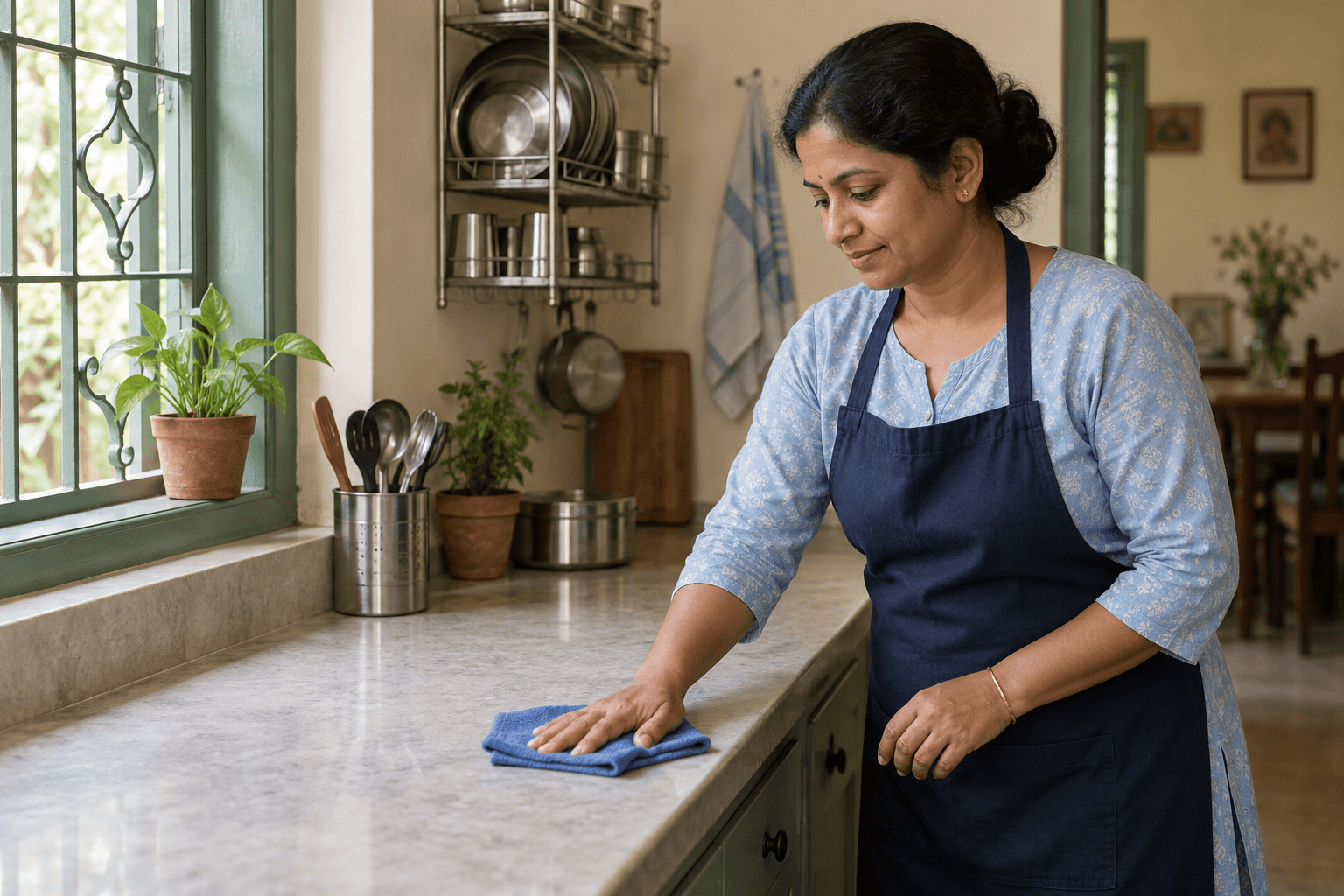
Clean accessible kitchen cabinets one manageable section at a time, using the care method for the actual surface and finish. Remove loose dirt as permitted, wipe using the approved materials, dry as directed and inspect the result before returning any contents. Treat a damaged edge, an unknown coating or a persistent mark as a separate question rather than a reason to scrub harder.
Cabinet cleaning and cupboard organisation are different jobs. Cleaning concerns the surface and its condition. Organisation concerns where belongings are kept. You can clean an agreed cupboard without changing the kitchen's storage system.
Identify the surface before choosing the method
A cabinet can have different materials on its door, shelf, frame and handle. Find the relevant maker's care information or other reliable instructions for the actual fitted product. A wood-like appearance does not establish that the entire cabinet is solid wood or that one cleaner suits every part.
If the finish is unidentified, peeling or otherwise uncertain, resolve the care question before wet cleaning. This guide cannot identify a finish remotely, approve a repair or provide instructions for restoring damaged cabinetry.
Choose one section and clear only what is needed
Decide whether you are cleaning door exteriors, an accessible frame or a particular interior shelf. If the task is exterior wiping, there may be no reason to empty the cupboard. If an interior section is included, prepare a suitable temporary place for its contents before moving them.
Keep contents grouped so they can return to their existing locations. Do not use a cleaning session to discard possessions, combine food containers or remove labels. These decisions can expand the task and make a usable kitchen harder to restore.
Plan the work around access. This routine does not include climbing, moving appliances, removing doors or dismantling hinges. Work on reachable areas and treat any fitting or access problem separately.
Use a permitted wipe-and-dry sequence
IKEA's cabinet guidance describes gentle cleaning with a slightly damp cloth and a mild detergent, followed by drying. It highlights edges and joints where moisture should not remain. This is guidance from one maker; your cabinet's own instructions determine whether the method applies. IKEA cabinet cleaning
Prepare the appropriate materials before beginning so the drying step is not forgotten while another section is started. Work through the selected area rather than wetting a whole row of doors in advance. Check the finish under ordinary light after the permitted cleaning and drying are complete.
Do not interpret a “mild” cleaner as permission to mix ingredients or choose a homemade formula. Use an identifiable product compatible with the surface and follow its directions. If a maker requires a specific preliminary test or other condition, follow that actual guidance rather than an improvised version.
Use the result to choose the next step
| Observation | Appropriate next decision |
|---|---|
| Loose dust on a known, stable surface | Remove it by the item's permitted method |
| Ordinary fingerprints covered by the care routine | Follow that routine and complete the drying step |
| A mark remains after the ordinary method | Check the material-specific guidance before escalating treatment |
| Moisture remains near an edge or joint | Complete the appropriate drying step rather than moving on |
| A surface appears to lift, flake or change | Stop work on that section and obtain appropriate advice |
| A door or fitting does not move normally | Treat it as a fitting issue, not part of wiping |
| Contents need a new storage location | Handle this as an organisation decision separate from cleaning |
A persistent mark does not justify a promise that stronger rubbing will remove it. It may require different care or may be a change in the finish rather than removable dirt. This guide does not make that diagnosis.
Work around handles and frequently touched areas
Pay attention to the accessible areas people touch when opening the cupboard. They may need a more deliberate pass than an untouched section of the same door, but the surface restrictions still apply.
Check whether a handle has different care requirements from the surrounding front. Do not assume a cleaner suitable for one is suitable for the other. Keep hardware adjustments, tightening and removal outside this routine unless a separate appropriate arrangement has been made.
Where ordinary wiping is permitted, complete it methodically and inspect the reachable edge before replacing contents or declaring the section finished. Avoid judging success only by whether the centre of the door looks brighter.
Fictional example: two fronts and one shelf
A fictional household in Kolkata wants the fronts of two cupboards and one accessible shelf cleaned before the evening cooking routine. The fronts have identifiable care guidance, and the shelf is included in that guidance.
The household clears only the selected shelf, keeping its contents together in a suitable temporary place. The helper prepares the permitted cleaning materials and a separate suitable drying cloth. They complete one front before moving to the next, then work on the cleared shelf.
A small mark on the second front remains after the ordinary routine. The helper reports it rather than adding an abrasive pad. The household checks whether its maker provides further advice, leaving that mark outside the completed ordinary cleaning.
Once the shelf has received the required care and is ready for use, the contents return to their original places. No labels have been removed and no kitchen layout has been changed. The task ends with a usable cupboard and one clearly identified unresolved issue.
Keep cleaning separate from a larger reset
Use the kitchen-cleaning scope to state exactly which exteriors and interiors are included in a visit. The cleaning supply inventory can retain the identifiable product and tool information.
If the household also wants to relocate utensils, use the separate kitchen cupboard organisation guide after defining that additional task. A cleaning visit should not accidentally become an entire storage redesign.
For home cleaning in Kolkata, contact Anjali Aaya and Nurse Care by phone or WhatsApp. Describe the reachable cabinet sections, known surfaces and requested work, then confirm suitability, availability and the quotation.