An everyday lunchbox may include a base, lid, removable seal, divider, small sauce pot and spoon. Washing only the large box can leave food in a narrow rim or cause a missing component when the next meal is packed. The useful outcome is a clean, completely dry and correctly reassembled set, handled within its own maker instructions. This guide covers ordinary reusable food containers, not damaged insulated electronics, baby feeding equipment or a food-safety certification.
Count the components before starting
Identify the owner and set. One Kolkata household may have several similar school and office tiffins, and lids can appear to fit the wrong body. Put all parts from one box together on a clean work area, then count what is present. Write a one-line count beside the set: body, lid, seal, insert, sauce pot and utensil as applicable. If a spoon or insert is absent before washing, note that rather than letting the wash itself become the assumed cause.
Check for food remaining in separate compartments. Follow the household's waste route before putting the box in a sink. If food has been left for an uncertain period, the owner decides how to handle it; a worker should not repack it. Inspect cracks, loose clips or a seal that is already torn. Cleaning cannot restore a lid's leak resistance or confirm that an old container remains suitable for food use.
Read care instructions for body and lid separately
An IKEA India container example lists a polypropylene body and lid plus a silicone seal. Its care instructions address the body and assembled lid; they do not establish that the seal can be removed or separately washed. IKEA India's container-care overview points shoppers to the instructions for the actual item. Tupperware's Lunch-It care note concerns that named set and says to dry it before storage. These sources do not mean every tiffin is dishwasher-safe. Check the actual item and do not remove a seal unless the maker says it is removable and the owner agrees.
Decide whether the parts are hand-wash-only, dishwasher-safe or uncertain. The dishwasher loading guide helps only after compatibility is established. A faded logo or an unlabeled box is not enough to infer that a plastic lid tolerates heat. Avoid harsh scrubbing on surfaces that could be scratched and avoid soaking insulated or joined parts without instructions.
Work through each washable part
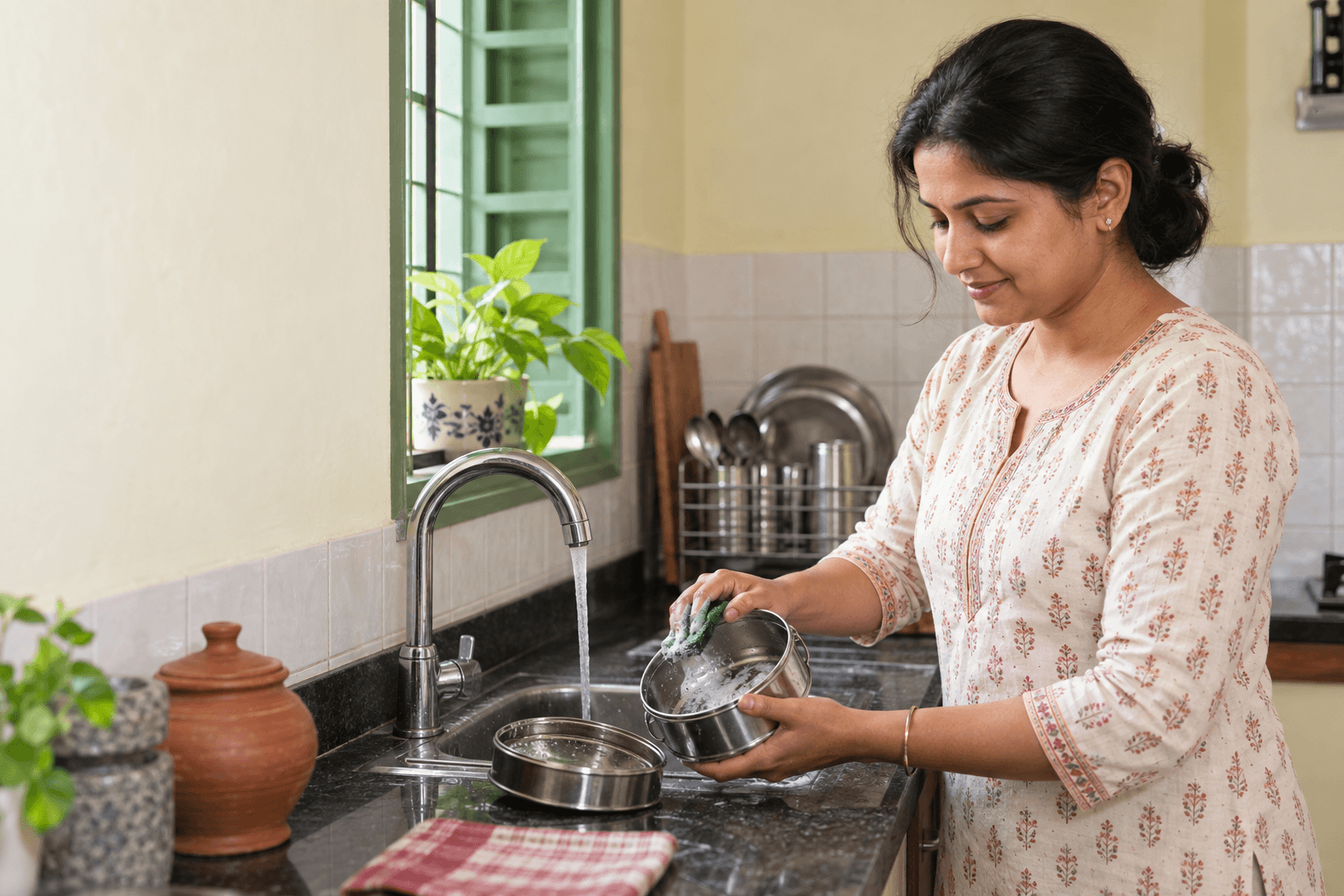
Wash the accepted body, corners and underside according to its product guidance. Then attend to the lid's channels and reachable seals, without using sharp tools to lever components out. Handle inserts and utensils by their own material instructions. Keep the rinse and drying areas separate from dirty dishes. If a part is too narrow to clean by the permitted tool, record that limit and seek the owner's or manufacturer's advice rather than improvising a blade or solvent.
After washing, allow each part to dry completely as directed. Stacking an almost-dry lid tightly onto a warm or damp box can trap moisture; an open drying arrangement is clearer. Reassemble only when the intended owner needs the set or the manufacturer's storage advice permits it. Match the right lid, insert and body before declaring it ready.
Return with an honest status
Use a simple three-state handover: ready and complete, drying, or needs owner decision. If the body is dry but the seal is still wet, the set is not ready for a bag. If a clip was broken before the wash, mention it. Keep lunchboxes for different users in their agreed shelf positions, especially when a child's box looks like an adult's small container.
A fictional family has two identical stainless-steel tiffin bodies with different lids. One lid has a removable seal that the product manual allows the owner to remove; the other does not. The parts stay separately grouped, are washed by their specific instructions, then dried and counted. A missing insert remains on the handover note. This example demonstrates tracking, not a customer testimonial.
If daily tiffin washing is part of a dishwashing-help enquiry in Kolkata, mention how many multi-part sets there are, which parts are dishwasher-safe and the usual return deadline. Confirm the included work and complete price through WhatsApp or calling +91 98041 26771. No particular container's suitability or leakproof result is guaranteed.