
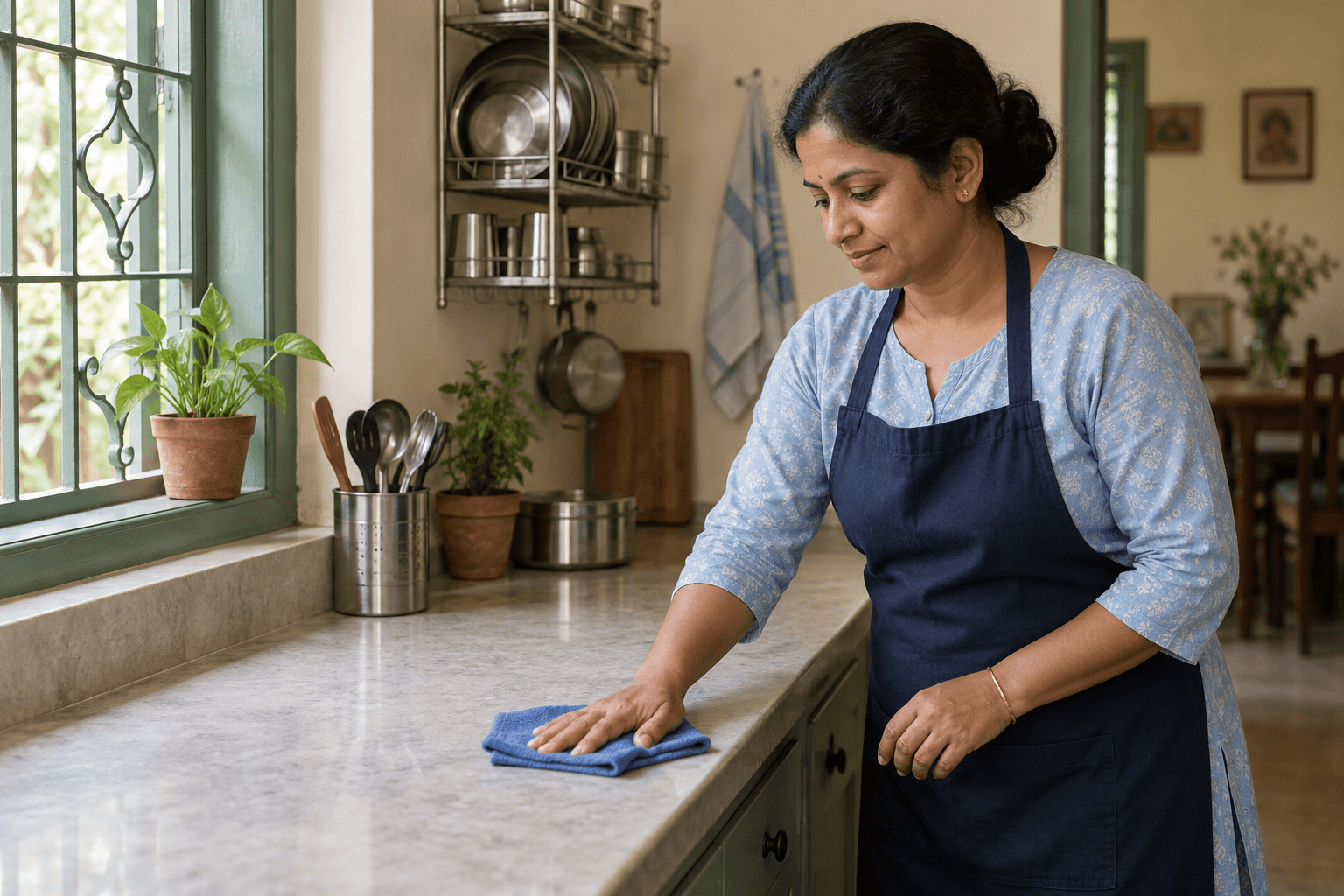
To clean a bathroom, clear the accepted surfaces, prepare the products specified for each material, work through the fixtures in a deliberate order and finish the floor before returning the room to use. Keep toilet-cleaning equipment separate from equipment used on the basin, mirror and personal-item surfaces. Complete each product's instructions instead of applying several cleaners around the room at once.
This is a routine household workflow. It does not promise disinfection, treat mould, clear blocked drains or restore damaged grout and fittings. A leak, loose fixture or unexplained surface change needs separate attention; cleaning should not hide it.
Prepare the room for a complete task
If this is the home's only bathroom, agree a usable work period before starting. Put necessary personal items somewhere the household can access without walking through the work area. Keep medicines, toothbrushes, towels and other belongings under household control instead of placing them on the floor or in a basin that is about to be cleaned.
Check the actual surfaces. The basin, tap finish, mirror, shower screen and floor may need different products and tools. Read the surface guidance alongside each product label, including ventilation, protective-equipment, application and rinsing requirements. Do not mix products or transfer them into an unlabelled container.
Kohler's care guidance illustrates the need for material-specific handling: it distinguishes different fixture surfaces and calls for appropriate soft cleaning tools and removal of cleaner from affected surfaces. Its instructions apply to its products; they are not a universal prescription for every bathroom. Kohler care guidance
Start with cleared, reachable non-toilet surfaces
Use a simple route through the room: accepted mirror or shelf surfaces, basin and fittings, shower or bathing area, toilet, then floor. Change that order where the room's access or the actual product instructions require it. The aim is to avoid walking across a finished wet floor to complete a forgotten fixture.
For each area, first remove the accepted loose items and visible debris by the suitable method. Apply the correct care routine to the actual surface, complete its required residue removal and finish or drying stage, then inspect it. Do not leave a product standing while moving to another fixture unless its own directions call for that condition.
Keep a place for used tools distinct from clean supplies. A cloth used around the toilet should not return to the mirror or basin. If the cloth's previous use is uncertain, resolve that uncertainty before using it on another surface. The cleaning-cloth guide explains why a cloth's identity and care matter, although bathroom tool allocation remains separate from kitchen work.
Give each fixture its own finish point
The basin is complete when its accepted surfaces have received their required care and the household can understand any remaining limitation. A tap mark that persists after the permitted method is not a reason to add an acidic mixture or abrasive pad. Check the finish-specific guidance before another treatment.
For the shower or bathing area, identify exactly which reachable surfaces are included. Do not extend the request into removing fittings, lifting drain covers or treating concealed areas. Keep personal products identifiable and return only those belongings that belong in the finished section.
Handle the toilet with its dedicated equipment and the instructions for both fixture and product. This page deliberately supplies no interchangeable toilet-cleaner formula, contact time or disinfection claim. Complete the actual instructions before setting equipment aside for its own appropriate cleaning and storage.
Finish the floor after the fixtures
Clear the route out before beginning the accepted floor method. Take out unused supplies and belongings that should not remain on the floor. Work in manageable areas so you can reach the exit without crossing the just-cleaned section. The floor's material and product directions govern the amount of liquid, cleaning method and return to use.
Do not make the room available merely because the appointment time has ended. Explain any remaining wet area, incomplete surface or other restriction. Where a floor or fixture seems unexpectedly slippery, damaged or unsuitable for use, keep that concern visible and obtain appropriate advice rather than demonstrating it by testing with a foot.
| Stage | Practical completion check | Separate issue to report |
|---|---|---|
| Personal belongings | Accepted items protected and identifiable | Unclear disposal or relocation request |
| Mirror/shelf surfaces | Correct material routine completed | Damaged coating or unreachable area |
| Basin and fittings | Required residue removal finished | Leak, loose fitting or persistent finish change |
| Shower/bathing area | Accepted reachable sections completed | Concealed buildup or treatment beyond routine care |
| Toilet | Dedicated equipment and actual directions used | Fault, blockage or unresolved condition |
| Floor | Route finished and return-to-use conditions met | Remaining wetness or unexpected surface problem |
| Reset | Supplies stored and belongings restored | Any task still awaiting a decision |
Fictional example: one shared bathroom before the evening
A household in Joka agrees a cleaning period between its afternoon and evening routines. Personal items move to a prepared shelf outside the work area. The helper has the accepted products and dedicated toilet equipment ready before beginning.
The mirror and basin are completed first, followed by the agreed shower surfaces. A dark line at a damaged seal remains outside the routine task and is reported; nobody calls it removable dirt or attempts a repair. The toilet receives its separate method, and the floor is completed last with a clear route out.
Before the room returns to use, the household checks the finished sections and any conditions still in effect. The unresolved seal issue is recorded separately from the cleaned surfaces. This produces a usable account of the work without claiming that the bathroom has been sterilised or restored to new condition.
Connect the routine to a booking
Use the existing bathroom-cleaning scope to agree inclusions before a visit. Keep products identifiable with the cleaning supply inventory and distinguish a routine visit from a different request through routine versus deep cleaning.
For home cleaning in Kolkata, contact Anjali Aaya and Nurse Care through WhatsApp or call. Share the bathroom count, accessible surfaces and known limitations. Suitability, supplied materials, availability and the complete quotation require confirmation.