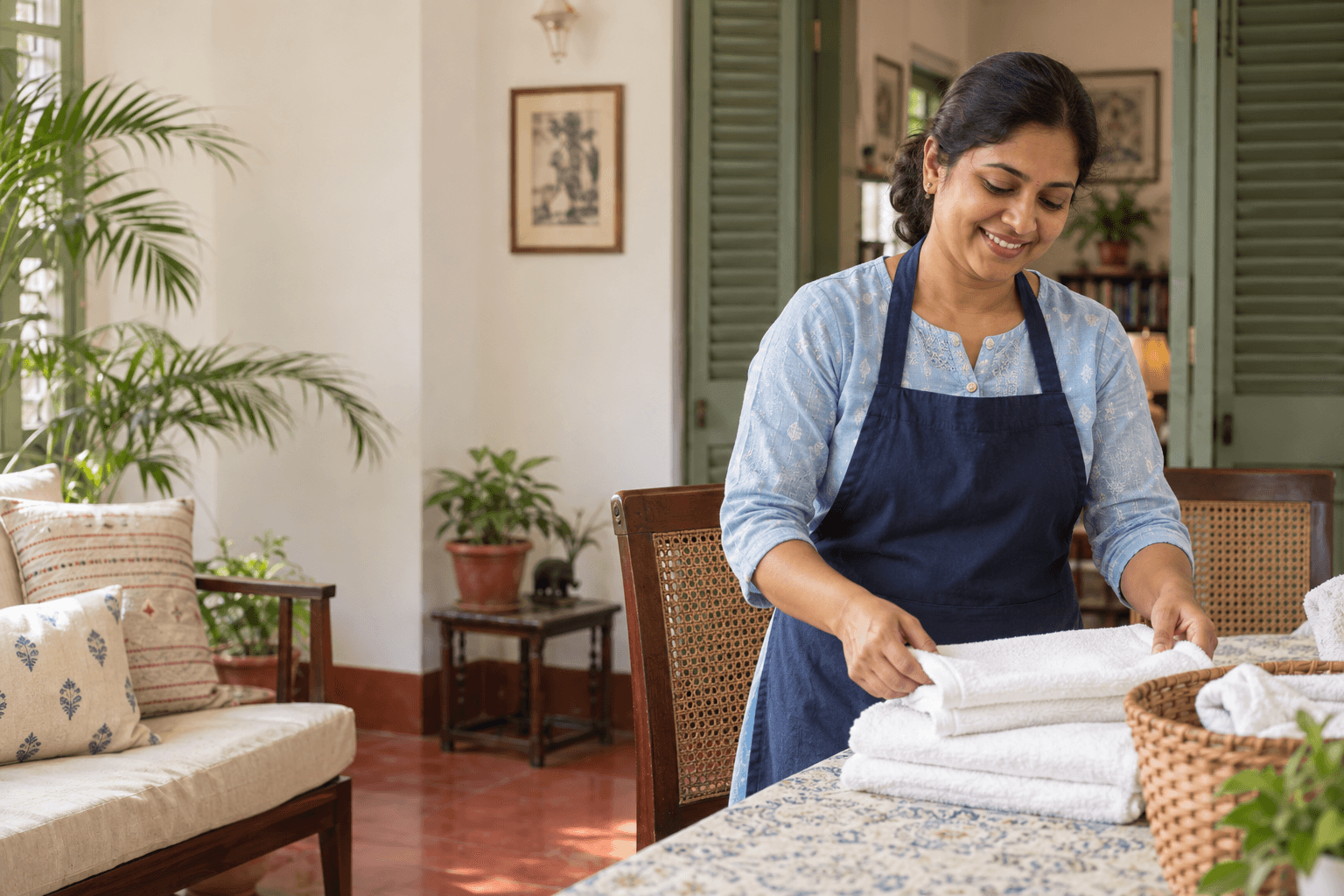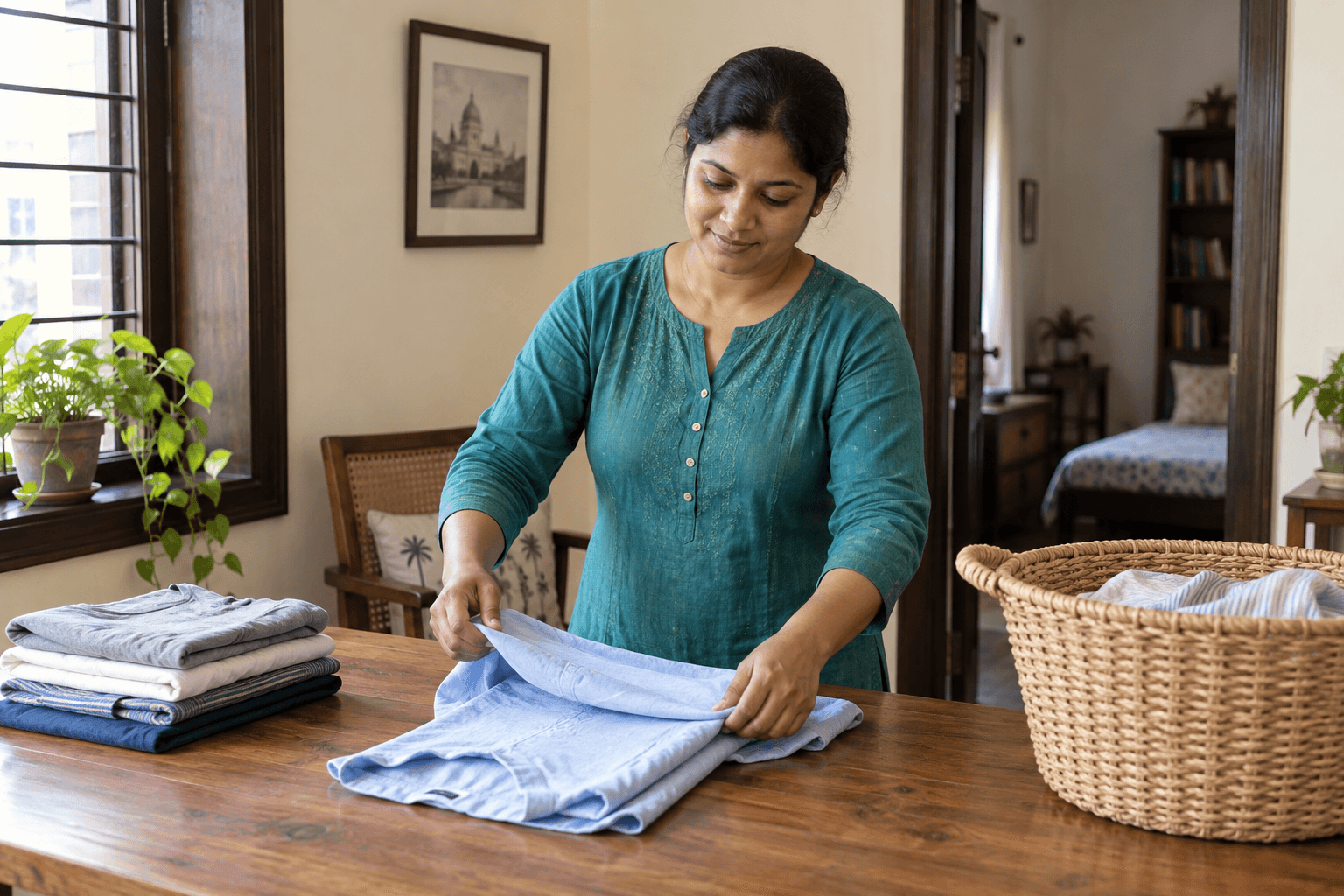
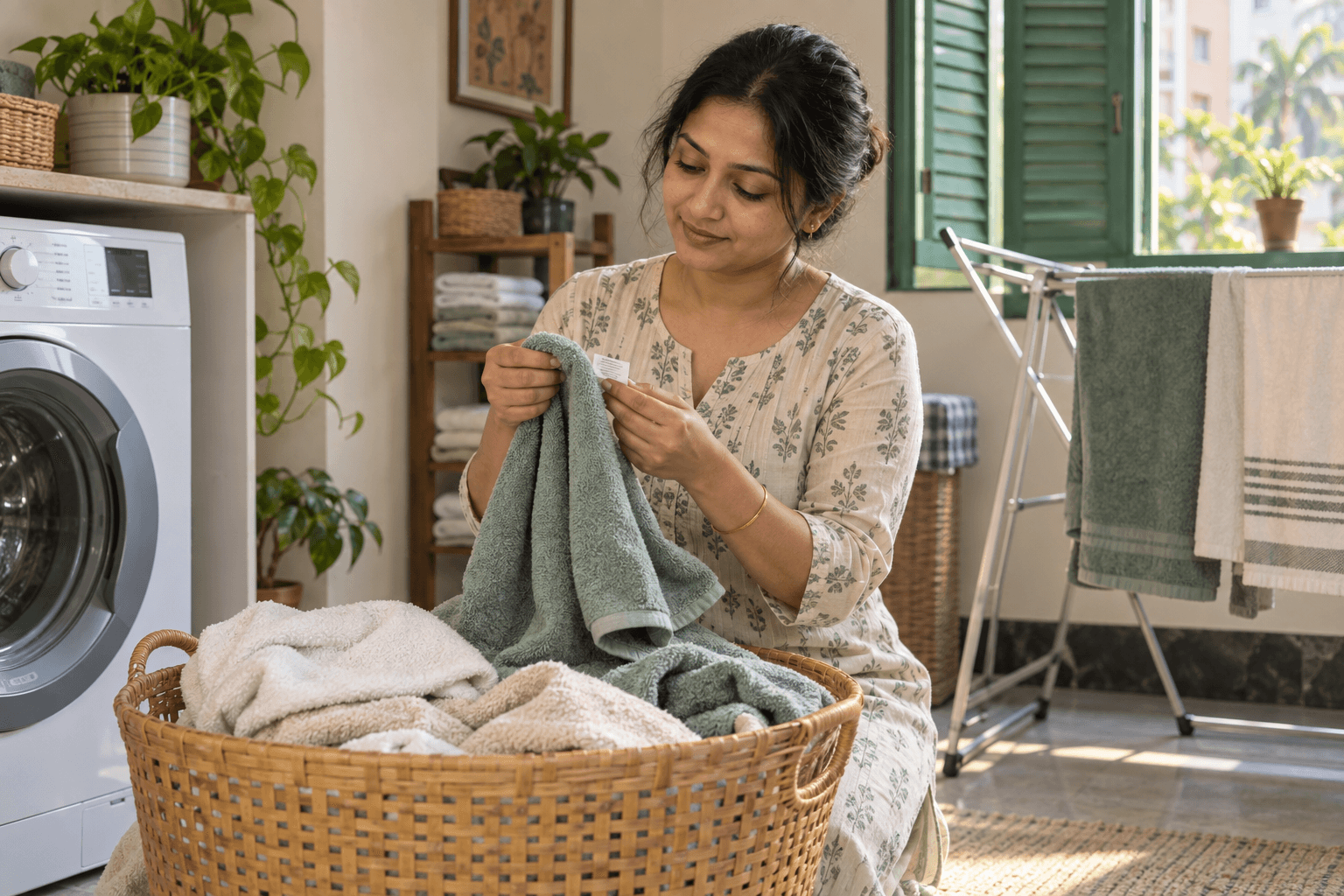
For a household towel load, collect only the pieces assigned to the task, check their care labels, group compatible items, load the machine without packing it tight, and follow the towel and machine instructions. Plan drying and return before starting: a towel is not ready for a cupboard merely because the wash cycle ended. Keep decorative, damaged or uncertain pieces identifiable for the owner instead of quietly treating every textile as the same cotton bath towel.
Count and identify the towels before washing
In a shared Kolkata home, bath towels, hand towels and guest towels may be similar in colour but have different owners or return shelves. Ask which bathrooms and household members are included. If a towel is still in use, do not remove it simply to complete a matching set. Record the count taken from each agreed location and identify the clean replacements needed while the used pieces are being processed.
Check for decorative borders, embroidery, unusual fibres or a faded label. Whirlpool's towel-care guide specifically notes that trim can change permitted wash and dry settings and puts the towel's care tag first. Treat its general recommendations as product guidance, not a fixed programme for every textile. If a label is unreadable, set that item aside for owner advice rather than guessing a hot cycle.
Keep bath towels distinct from kitchen wiping cloths and bathroom cleaning rags. Those have different jobs and can have different handling instructions. The laundry sorting guide explains how to build compatible loads; this page follows the towel group through the rest of its handover.
Form an actual compatible load
Separate towels that cannot share the same label-compliant method. A plain everyday towel and an embellished guest towel may need separate treatment even if both are called “white.” The household may also prefer owner-specific groups or separate dark and light textiles. Choose a grouping that honours the instructions without creating so many tiny loads that nobody knows which stage each item reached.
Check the washing machine's capacity and operating instructions. Towels become heavy and bulky; do not fill the drum to the rim because several are waiting. Whirlpool recommends loading towels loosely enough to move and measuring detergent as directed. It also notes that fabric-softener residue can reduce towel absorbency. Neither point is a reason to improvise a dosing formula or to alter the family's approved product without agreement.
Do not borrow a universal temperature or “sanitise” setting from a search result. Care tags, machine programmes, colours and any embellishment matter. This guide makes no claim that a home wash disinfects the towels or removes a specific health risk. A textile with unusual soiling, a skin-care concern or a special laundering instruction needs its own appropriate decision.
Carry the load through drying, not just the machine cycle
Name a realistic drying destination before pressing Start. In the monsoon, a small flat may have limited indoor rack space, and the current load may compete with uniforms or sheets already drying. The indoor drying guide helps plan usable space and a handover without pretending that a fixed number of hours is enough in every room.
When the wash completes, move the towels to the method their labels and the household's equipment allow. Avoid leaving them in a closed machine while another task takes priority. If a dryer is permitted, use the actual label and dryer instructions and stop when they are ready; Whirlpool cautions that overdrying can damage fabric. If air drying is used, hang or spread items so they can complete drying in the chosen space without dripping onto another household area.
Check each piece before folding. A damp corner, thick border or inner fold can remain wet after a broad surface feels dry. Do not hide that towel inside a clean stack. Reposition it and record that it is still drying. The last handover should say what was washed, what is dry and what remains in progress.
| Piece or group | Check before load | After wash | Final place or decision |
|---|---|---|---|
| Everyday bath towels | Owner, label and compatible group | Complete the allowed drying method | Return to the agreed bathroom cupboard |
| Decorative guest towel | Trim and separate care instruction | Keep identified if a different route is needed | Owner-approved guest-linen place |
| Towel with damaged edge | Do not conceal the condition in the load | Report if safe care is uncertain | Owner decides repair or retirement |
| Towel still damp at handover | It may have been washed correctly | Continue appropriate drying | Never count as dry cupboard stock |
A fictional Joka household's two-stage handover
A family has four everyday bath towels, two guest hand towels and one towel with an embroidered edge. The person organising the wash counts the items and finds that the embroidered piece has a different care label. The everyday towels form one compatible load. The guest pieces remain identified until their owner approves the next method; they are not mixed in solely to make the basket empty.
At the end of the first visit, the everyday towels are washed but still drying. The family note says “four washed, four on rack, none returned to cupboard.” During the next handover, three are dry and one thick-edged towel is not. Three are returned to the correct shelf; the fourth remains labelled as drying. This simple status record prevents a fresh-looking pile from concealing incomplete work. It is an illustrative example, not a customer story or a guaranteed visit duration.
Keep towel rotation understandable
Use the linen rotation tracker if several bathrooms share stock. Record a towel's location and state, not private details about who used it. A tidy cupboard depends on enough usable pieces being in the right places while another set is in the wash. If a household wants a special towel-folding appearance, agree that separately; the task here is a correct, findable return.
The general washing-machine walkthrough covers the controls and single-load sequence. For laundry help in Kolkata, describe the towel count, machine and drying facilities, preferred return locations and anything requiring special handling. Call Anjali Aaya and Nurse Care or WhatsApp your enquiry to confirm accepted tasks, availability and a complete quote.