
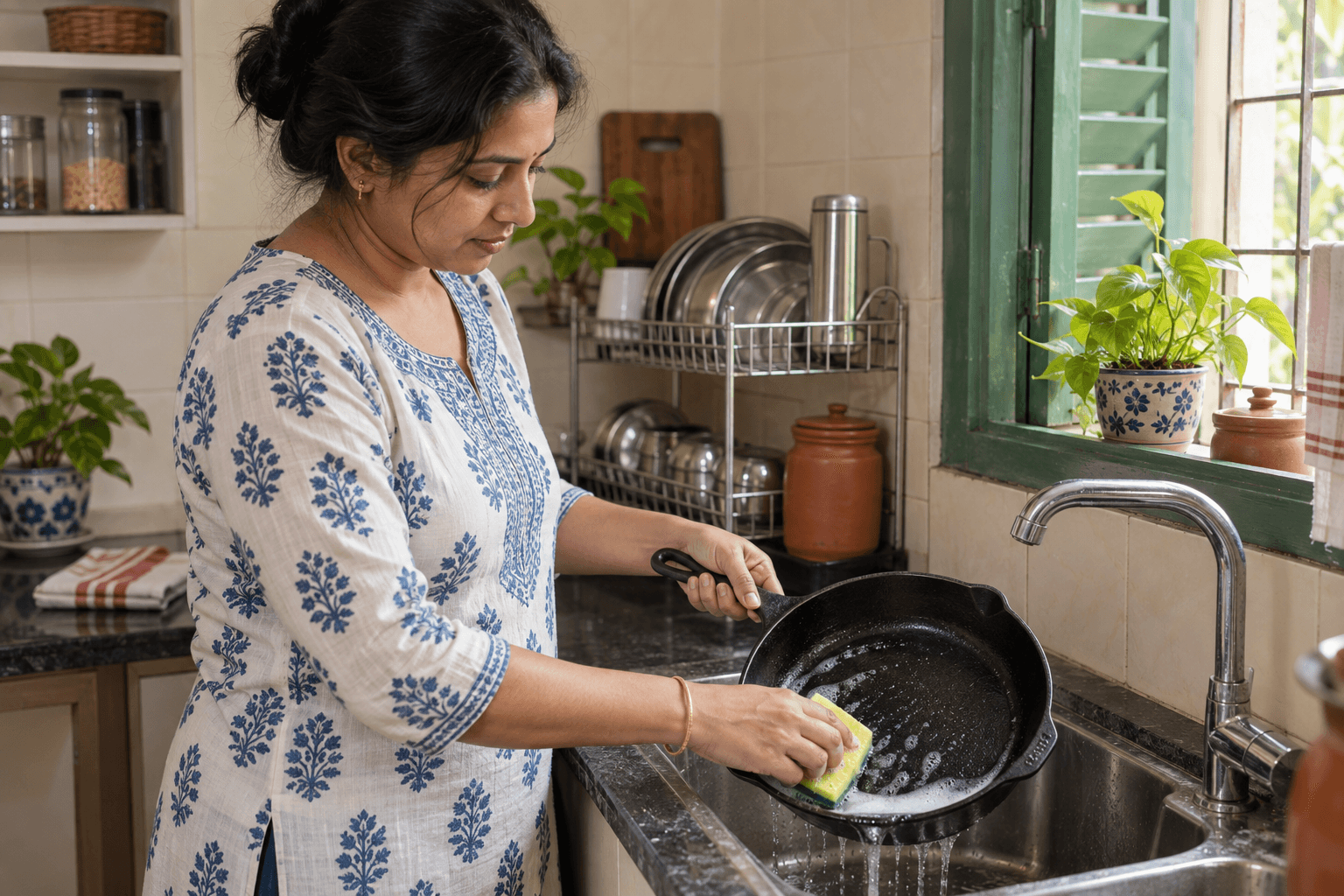
“Cast iron” describes the metal under the cooking surface, not one universal washing instruction. A seasoned black skillet and a glossy enameled casserole have different finishes and care routines. Before washing either in a Kolkata household, identify the maker and surface, check the item is cool enough for the maker’s method, and keep its lid or accessories with the right pot. This guide gives a comparison and a practical handover; it does not offer rust removal, re-seasoning or enamel restoration.
Lodge’s seasoned cast-iron cleaning page describes washing by hand, drying thoroughly and applying a thin oil layer for its seasoned cookware. Its enameled cast-iron care page instead advises allowing that product to cool, using warm soapy water and a gentle sponge or brush, then drying promptly. Le Creuset’s enameled cast-iron guide is another maker example. The correct instruction is the one for the exact pan in hand; the presence of black interior enamel does not mean it should be treated as bare seasoned iron.
Identify the piece before choosing soap or tools
Record the maker, product name if known, visible coating, lid material and handle type. Look for a care booklet or marking underneath. A dark, textured cooking surface may be seasoning; a black satin enamel interior can look similar. If the owner cannot identify the finish, pause chemical or abrasive cleaning and request the manufacturer’s method. Also note chips, rust, sticky buildup, cracks or loose handles before washing so there is no dispute afterward. Do not taste, scrape with a knife or use a metal scouring pad to “test” the surface.
Ask whether the cookware is still hot, whether someone will use it again soon, and where it should dry. Cast iron is heavy; clear a safe sink-side work area and lift with care rather than balancing it on a pile of dishes. The hand-washing nonstick cookware guide handles a different coating, and washing dishes by hand covers the overall sink sequence. Neither replaces the cast-iron maker instructions.
Use a finish-and-maker decision table
| Item identified | Maker-supported routine example | Avoid assuming |
|---|---|---|
| Lodge seasoned iron | Hand wash; Lodge says a small amount of soap is acceptable; dry thoroughly and apply a thin oil layer | Every cast-iron item needs oil on enamel |
| Lodge enameled iron | Let cool, wash with warm soapy water and gentle implement, dry promptly | Rough scraping is safe because the base is iron |
| Le Creuset enameled iron | Use its own care guide and model details | Lodge’s exact method applies without checking |
| Unidentified or damaged piece | Ask owner for maker instructions; isolate the concern | Rust or chip can be restored during routine dishwashing |
This table is a comparison, not an invitation to use every step on every pan. In particular, oiling a glossy enamel surface as if it were seasoned iron can leave an unwanted film, while omitting the maker’s drying step from a seasoned pan can be unhelpful. Handle and lid materials also matter, so read the full care guide for the specific product.
Work through a controlled wash
Remove food scraps according to the household’s sink practice. Wait for the cookware to reach the temperature required by the maker’s care guidance; do not put a very hot item into a crowded sink where someone could touch it. Use the permitted cloth, sponge or brush, and only the cleaner allowed for that finish. Do not leave a cast-iron pan submerged while washing other dishes unless the maker specifically directs a soak for that product and duration. Keep the lid with the base so parts are not exchanged between sets.
After washing, dry all permitted surfaces and the rim as the maker directs. For an identified Lodge seasoned skillet, the thin oil step belongs to Lodge’s care method. Do not apply it by default to an enameled casserole. Keep the pan in its agreed dry place. If a handle, knob or base remains wet or damaged, tell the owner rather than putting it away silently. If stubborn food remains, consult the exact maker’s escalation method instead of moving to harsh chemicals or metal tools.
Record what was done and what needs a decision
A short cookware record can say: “Lodge seasoned skillet, hand washed, dried, maker oil step completed; old orange spot noted on exterior before wash.” A different entry might read: “Unknown enameled pot, loose food removed, deeper mark left for owner to identify the maker.” These are illustrative, not claims that those actions occurred at a customer home. The record protects the next person from confusing a pre-existing chip or rust mark with a cleaning result.
Stop if a coating is flaking, a crack appears or the handle is unsafe. A cook or cleaner should not promise to restore a damaged cooking surface during ordinary dishwashing. Ask the owner whether the item should be set aside and whether the maker should be contacted. This respects food-contact surfaces without diagnosing whether a pan is safe for future use.
For an Anjali Aaya and Nurse Care dishwashing or home-help enquiry, share the cookware type and exact requested task on WhatsApp or call +91 98041 26771. Confirm whether this item and care method can be included. Specialist restoration, re-seasoning and repair are not implied.