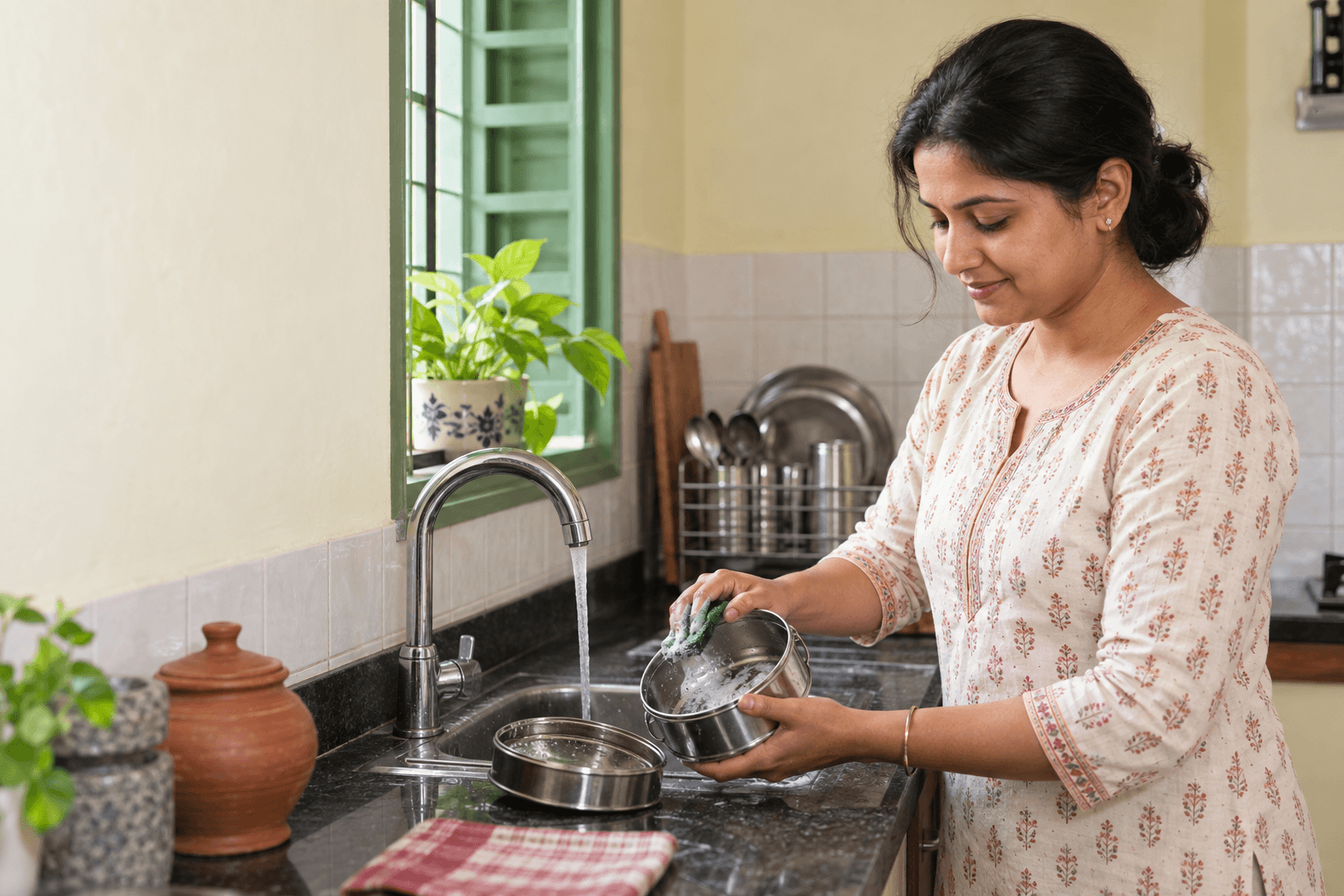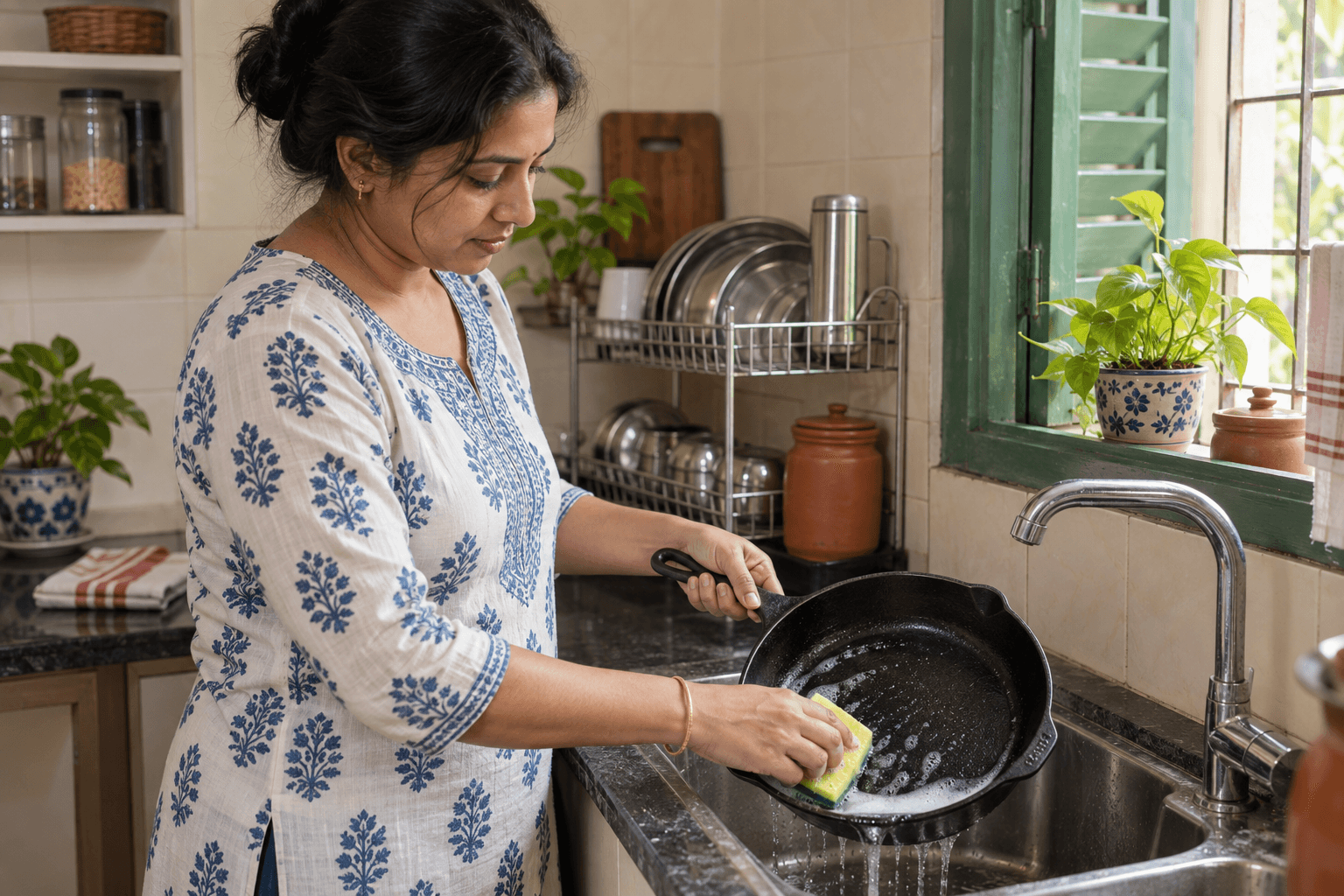

A nonstick frying pan is not just another plate in the dish pile. First let it cool, identify the manufacturer's care instructions and keep abrasive tools away from the coating unless its instructions explicitly say otherwise. Wash the accepted food-contact surfaces, handle and lid as their materials permit, then dry and return the set. If the coating is flaking or badly scratched, report it to the owner rather than trying to polish it back into service.
Identify the actual pan and separate the parts
Look for a maker mark, product leaflet or care note. Some households use a nonstick coated pan, a stainless-steel kadhai and a seasoned iron tawa in one cooking session. Their methods are not interchangeable. This guide concerns a pan that the maker identifies as nonstick; it does not cover seasoning iron cookware or repairing a surface. The general hand-dishwashing workflow explains how to organise a mixed sink, but the pan needs a coating-specific check.
Check whether the pan is still hot. If heat remains, allow it to cool in a secure place without blocking a counter or letting a child touch it. Do not pour cold water onto a very hot pan as an improvised shortcut; the actual manufacturer may warn against abrupt temperature changes. Record which lid belongs to the pan and whether it has a removable gasket or handle part. Do not dismantle unfamiliar components just to make them fit the sink.
Choose a non-abrasive method approved for this coating
Tefal's cookware-use instructions describe washing its cookware with liquid detergent and a sponge, and caution against scouring powder or abrasive pads. This supports a conservative starting point for that brand, not a universal claim about every coating. Check the real product instructions and household preference before using a particular sponge, detergent or machine.
Remove ordinary loose food with the permitted non-abrasive tool and use the maker-approved washing method. Give the base, outer rim and handle joint attention if the instructions allow contact there; grease can remain outside a clean-looking interior. Avoid scraping with metal, coarse pads or powdered cleanser to remove a stubborn patch. If soaking is allowed, keep it within the maker's limits. A burnt or baked-on deposit may require owner or maker guidance rather than extra force.
Do not turn a dishwasher decision into a guess
Some nonstick pans are marked dishwasher-safe and others are not. Even when a claim exists, the household may prefer hand washing for its cookware. Check the pan's own label or manual and write down whether that particular pan and lid are permitted in a dishwasher. If instructions are missing, keep the pan in the hand-wash decision group until the owner can confirm them. The dishwasher loading guide addresses accepted machine items generally; it cannot certify a pan with a missing label.
Rinse and dry according to the product guidance. If a lid traps water at a rim or knob, keep it separate until the water has drained rather than nesting it wet. Return the pan and lid to their agreed location without pressing a heavy pot onto its cooking surface if the owner wishes to protect the coating. A cloth divider or storage space decision belongs to the household; no new product purchase is required by this method.
Report coating damage rather than hiding it
Distinguish removable food residue from a chip, peeling layer, warped base or loose handle. Cleaning cannot fix a damaged cooking surface or confirm whether the pan is suitable for continued food use. Tell the owner what was visible and let them consult the maker or replace the item as appropriate. CDC home guidance separates ordinary cleaning from disinfection; this guide does not promise a sanitised pan.
For example, a fictional family leaves a nonstick pan and matching glass lid after dinner. The pan cools, its coating-compatible method is followed and both pieces are dried. A raised patch on the interior does not wash off, so the worker records it rather than scraping with steel wool. The pan is not presented as repaired. This example describes a decision, not a real customer result.
For dishwashing help in Kolkata, list any coated pans and their maker instructions when describing the daily dish load. Confirm whether they are in scope, what equipment the household provides and the quote through WhatsApp or calling +91 98041 26771. No cookware restoration is implied.