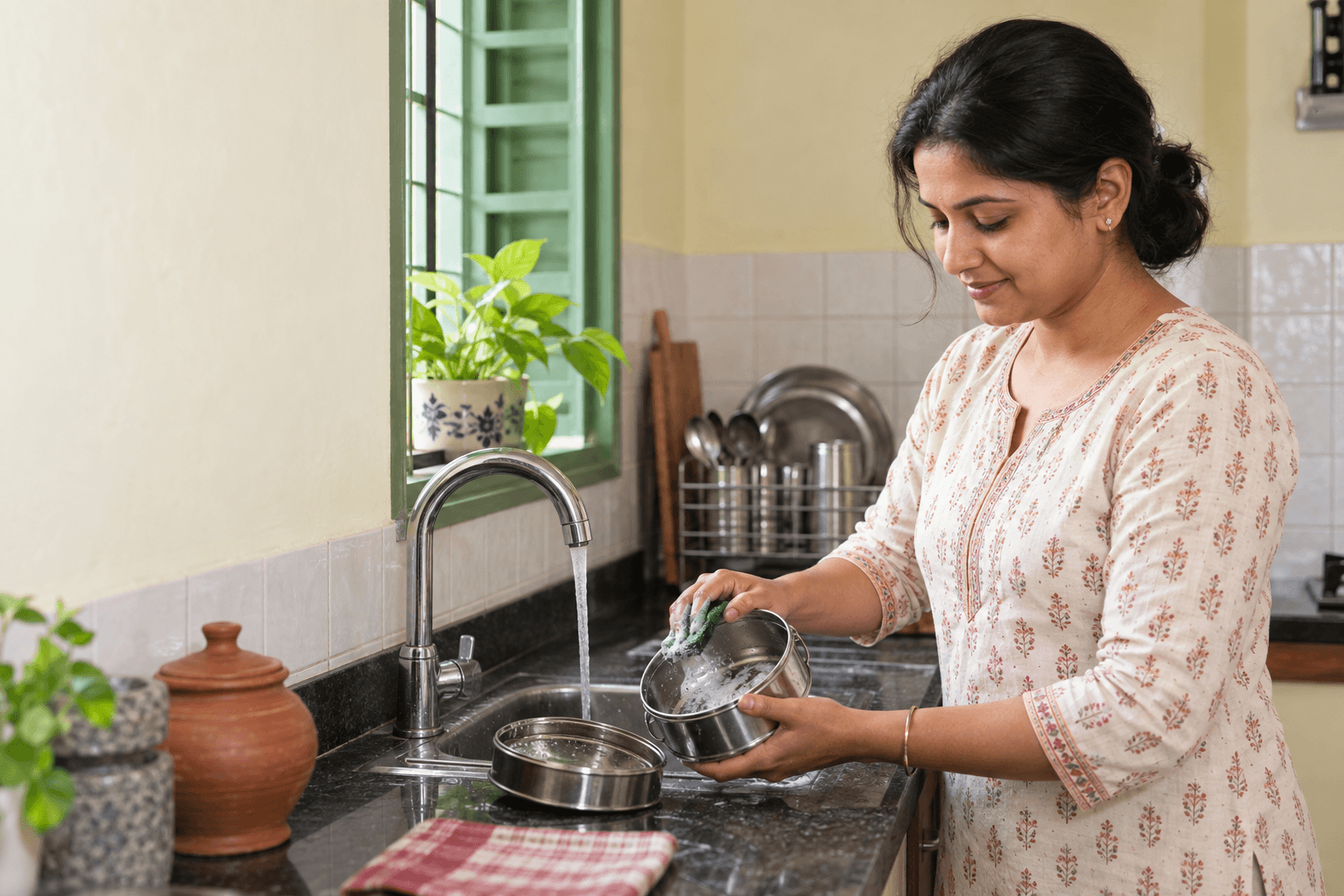
To clean a stainless-steel kitchen sink, clear it, identify the finish and its care instructions, complete the permitted routine for the bowl and drainer, then rinse and finish as directed. Keep cleaning the sink separate from clearing a blocked drain, servicing the tap or attempting to remove scratches. A surface-care task should end with an available sink and clearly identified unresolved issues.
This guide concerns an identified stainless-steel sink. A stone composite, coated, enamelled or other basin needs its own care method. A shiny appearance is not enough to establish the material, and instructions for one steel finish may not suit another.
Clear the sink with a destination for everything
Finish or relocate the agreed dishwashing first. Set aside utensils according to their own care status instead of washing them hurriedly to make room. A sharp, fragile or unfamiliar item should remain under the household's accepted handling arrangement.
Move the drain rack, washing bowl and loose accessories only where their removal is ordinary and agreed. Give them a place that does not block the next task. A counter full of wet utensils can prevent the sink from being finished even after its bowl has been emptied.
Decide whether the removable accessories themselves are included. The sink, rack and bowl may have different care instructions. If only the fixed sink surface is being cleaned, make that boundary explicit instead of silently expanding the task.
Use the actual finish instructions
Franke's stainless-steel sink guidance describes an ordinary soft-cloth, detergent, clean-water rinse and drying routine for its stated products. It also cautions about unsuitable products and rough sponge surfaces. This is a manufacturer example; it does not approve one cleaner or technique for every stainless finish. Franke stainless-steel sink care
Check both the sink instructions and the chosen cleaning product before starting. Keep the label available. Do not select a product merely because it is sold for bathrooms or says powerful on the bottle, and do not mix products in the bowl to make a stronger solution.
If a tap, seal, surrounding worktop or drain fitting has a different material, protect its separate care requirements. Do not assume permission to spread the sink cleaner across the whole counter. The kitchen cabinet-cleaning guide deals with another surface group and should remain a separate method.
Work through the sink as connected surfaces
Start with the accepted loose debris, collecting it through the household's normal permitted disposal arrangement rather than pushing unknown material down the drain. Then follow the approved cleaning method on the bowl, accessible rim and drainer. Include the portion previously hidden by a removable bowl or rack if it is part of the agreed task.
Use a clear order so you can tell what remains: drainer, rim, one side of the bowl and then the other is one possible route. The precise direction matters less than completing every accepted section and following any finish-specific directional instruction. This article does not prescribe polishing or scratch removal.
Carry out the required removal of cleaner residue and finishing stage. Check where the bowl meets the drainer and where water or product may have collected around an accepted accessory. Do not leave a prepared cleaner behind because someone wants to start the next load of dishes immediately.
Decide what a remaining mark means for the task
Describe a remaining issue by location and appearance: a pale deposit near the tap, an old line in the bowl or an unfamiliar discolouration beside the drainer. Avoid diagnosing all marks as rust, scale or removable dirt without sufficient information.
| Observation after the permitted routine | Useful next step | Avoid treating it as permission to |
|---|---|---|
| A small area was missed beneath an agreed accessory | Finish that accessible section | Remove fixed fittings |
| Cleaner residue remains | Complete the specified rinse/finish | Cover it with another product |
| A line remains in the steel | Seek finish-specific advice if needed | Abrade the surface until it disappears |
| A recurring deposit returns | Ask about suitable material-care advice | Dismantle the tap or plumbing |
| Water is not draining normally | Raise a separate plumbing concern | Add an improvised drain-cleaner mixture |
| An accessory does not sit properly | Check its placement and condition | Force it into position |
A sink can have completed routine cleaning while still needing a repair or separate surface assessment. Report both facts clearly rather than allowing one to obscure the other.
Reset the working area for the next use
Return accepted accessories only when their own care and the relevant sink finish are complete. Keep the cleaning cloth and tools out of the food-preparation area according to their care and storage instructions. Do not leave an unidentified used cloth inside the newly finished bowl.
Agree where waiting utensils go next. Cleaning the sink does not prove that dishes beside it have been washed, rinsed or dried. The hand-dishwashing workflow maintains those stages separately. If two people share kitchen duties, explain which stage each group of items has reached.
Fictional example: one sink, two unfinished jobs
A fictional Behala household wants its stainless-steel sink cleaned between meal preparations. The bowl contains utensils and a removable washing basin. Before beginning, the household moves the utensils into their agreed dishwashing sequence and identifies where the basin can be placed.
The helper follows the sink's accepted care routine, including the accessible area beneath the basin. An old scratch remains. It is reported as an existing visible line rather than treated with an abrasive powder. The helper also notices that the household has already raised a slow-draining concern; cleaning does not claim to resolve it.
After the finish is complete, the accepted accessories return to their places. The waiting dishes are still labelled by their actual stage. The household can use a clear account of what was done and arrange separate attention for the drain if needed.
Use the kitchen-cleaning scope to define the appointment and the cleaning supply inventory for product identifiers. For home cleaning in Kolkata, call or WhatsApp Anjali to confirm accepted surfaces, available help, materials and the complete quotation.