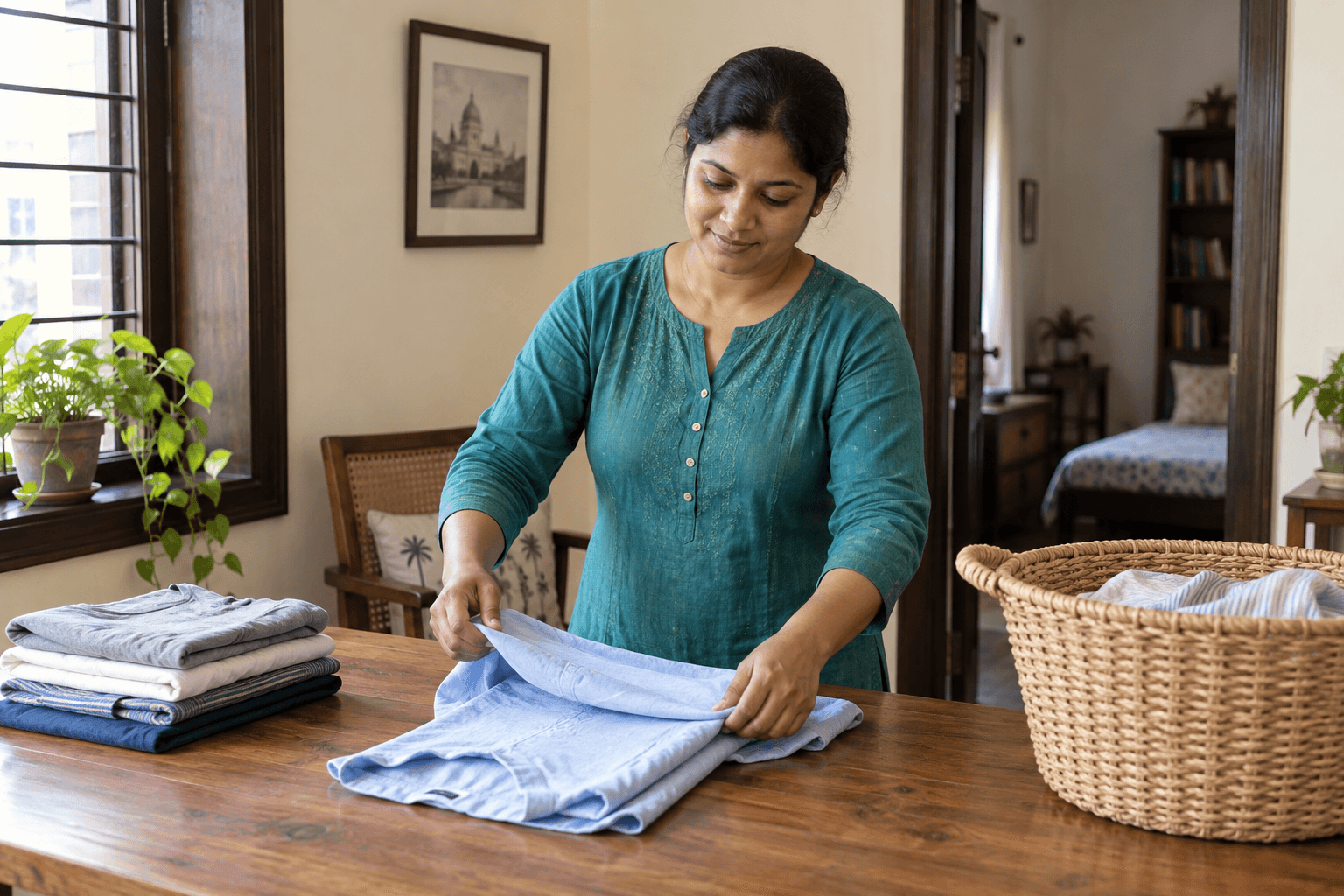
Jeans can look like ordinary sturdy laundry, but two pairs in the same basket may have different dyes, stretch fibres and drying instructions. A useful jeans wash begins with the actual care label and ends with a dry pair returned to its owner without lost pocket items or unexpected dye transfer to lighter clothes. This guide is for household laundering where the garment label permits it. It is not a promise to remove a stain, restore faded denim or prevent all shrinkage.
Make a pair-by-pair decision before loading
Lay out the jeans and read each sewn-in care label. Check the fibre composition, permitted wash method, temperature, bleaching, drying and ironing symbols. A raw or heavily dyed pair deserves separate attention from a familiar light-blue pair. If the label says dry clean only, or the wearer has special raw-denim care instructions, set the pair aside and ask the owner. The general laundry-symbol guide helps decode symbols, but the item-specific instruction decides the method.
Empty every pocket while the owner is available for found items. Coins, receipts, tissues and keys should not enter the drum. Note loose buttons, a damaged seam, embellishment or a colour mark that existed before washing. If a mark needs treatment, do not apply a stronger chemical without a garment-specific instruction and owner agreement. The laundry pocket record gives a simple handover route for items that should go back to the wearer.
Levi's denim care guidance recommends turning its denim inside out, closing the zip, washing in cold water on a gentle setting and drying away from a tumble dryer for the garments covered by that advice. Its dark-denim note also explains that new dark denim can transfer dye. These are useful manufacturer examples, not permission to override a different pair's label. If an exact garment label gives a different permitted process, follow that label or ask the owner.
Build a compatible load
Separate new or uncertain dark denim from white towels, pale uniforms and absorbent bedding. Consider fabric weight as well as colour: a heavy pair may not be a good companion for delicate blouses. Keep a first-wash dark pair separate when its maker or owner recommends that. The laundry sorting guide handles the wider basket; this page resolves the specific denim decisions before that basket becomes a machine load.
Once the load is agreed, close zips and fasten buttons if the item's instructions allow it, then turn suitable pairs inside out. Check the machine's loading capacity and leave room for the clothes to move according to its manual. Choose the permitted programme, water temperature and detergent rather than copying a setting from a different garment. Do not add bleach just because another light item is in the household. If a denim pair requires hand washing, the hand-washing guide explains the separate workflow; do not improvise a machine cycle.
Keep an easy count: pairs into the wash, pairs out, then pockets and fasteners checked again. For a mixed family load, identify whose jeans are whose before the wash. A black school-time pair and a similarly sized office pair can be confused once they are wet and turned inside out. A small removable owner tag or a written load note avoids guessing at the return stage.
Dry for the actual garment and the space available
Read the drying symbol again before choosing an indoor rack or outdoor line. Levi's guidance favours air drying its jeans, including darker pairs in shade. A different maker's label may permit another method. Do not place jeans in a hot dryer merely to meet a handover deadline when the care label forbids it. Empty pockets and open folds so dampness is not hidden at a waistband or thick seam; check the actual drying result before storage. The indoor drying guide helps plan rack space during Kolkata monsoon days.
If the pair is still damp at the end of a booked visit, give the owner a clear status and agreed drying location. Never fold it into a closed cupboard to make the basket look finished. A light garment that picked up dark colour, a distorted embellishment or an old tear noticed after washing needs an honest note rather than a confident claim that all denim behaves alike.
| Pair in the basket | First decision | Return condition |
|---|---|---|
| New dark pair | Check label and possible dye transfer; keep away from lights | Dry, colour issue reported if seen |
| Familiar stretch denim | Check fibre and drying limits, not just colour | Fit or seam concern noted, not promised away |
| Labelled specialist or raw denim | Ask wearer before choosing method | Hold separately until agreed |
| Pair with pocket contents | Record and return items before washing | Jeans and found items reconciled |
In a fictional Joka household, two blue pairs and one new black pair arrive with a load of pale school clothes. The black pair is not automatically added to the pale load. The worker checks its label and owner preference, records a coin found in another pocket, washes only compatible items, and leaves the black pair as a separate agreed task. That is a process example, not a customer outcome.
For a laundry-help enquiry in Kolkata, describe how many jeans are in a normal visit, whether any are new or specialist denim, and where they may dry. Ask about the exact included work and price via WhatsApp or call +91 98041 26771.